Why Some Apps Rank on App Store Top 100 Fast (And Others Never Do)
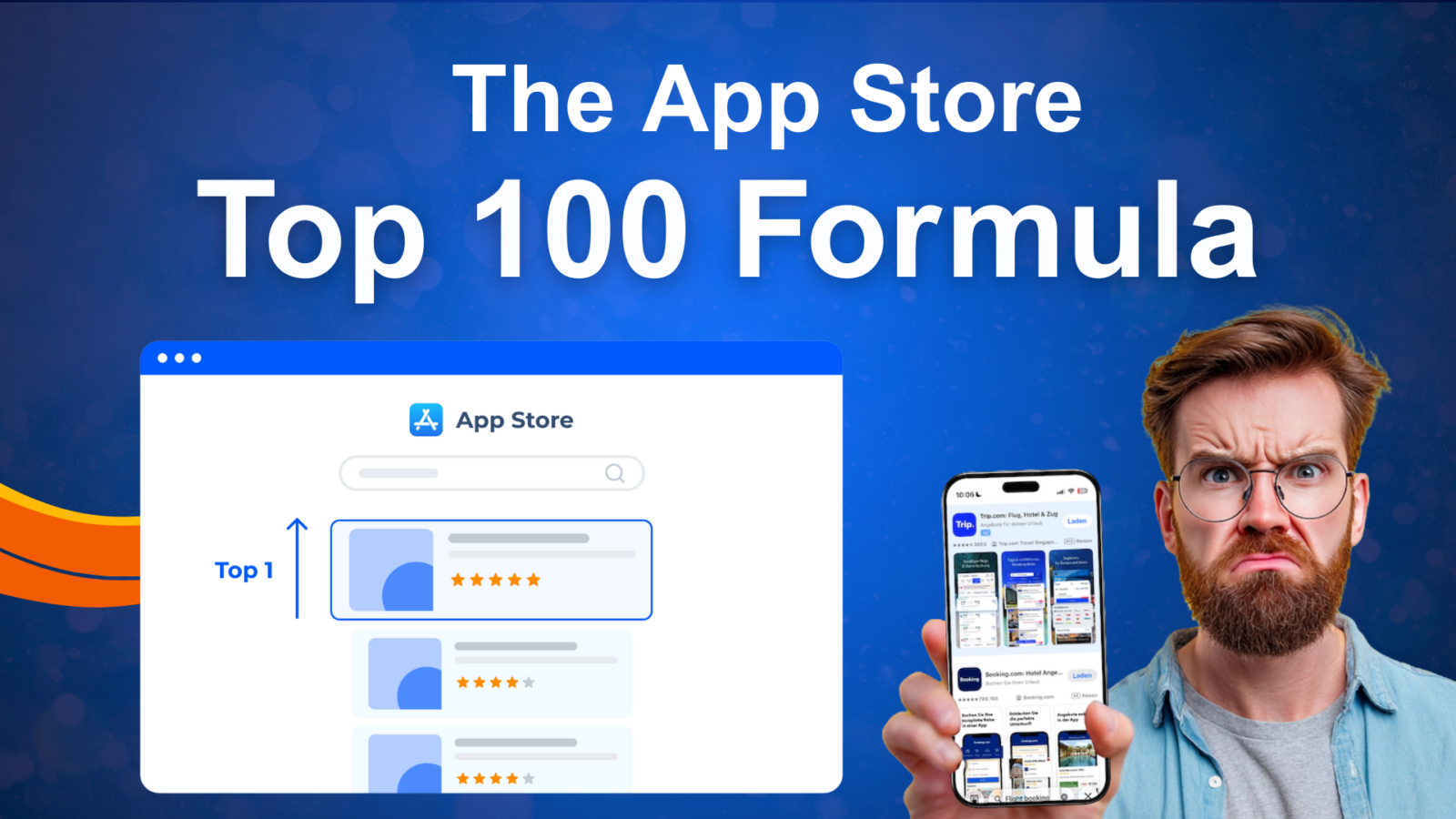
Ranking on app store top 100 isn’t a reward for having a great app.
It’s a reward for creating momentum that holds.
Most apps don’t miss Top 100 because they lack “growth hacks.” They miss because their momentum leaks in three places:
-
the store page
-
the first session
-
the early reputation signals
If one leaks, the whole climb collapses.
Top 100 ranking is velocity, not visibility
Founders often treat Top 100 like an SEO problem.
“Let’s tweak keywords.”
“Let’s rewrite the description.”
“Let’s do better ASO.”
That helps search.
But Top Charts behave differently.
Charts are driven by install velocity (and revenue velocity for top-grossing).
That means the real game is:
🔥 Install density in time, not just total installs.
And density only works if conversion + retention don’t break underneath it.
The hidden mechanism: charts reward popularity, search rewards relevance
Google is unusually explicit about this.
Apps shown on Top Charts are heavily influenced by popularity.
Apps shown in search results are heavily influenced by relevance.
So if your plan is “rank Top 100”…
You’re trying to win the popularity engine.
Not the relevance engine.
That difference changes what you prioritize:
-
charts = velocity + quality signals
-
search = metadata + intent match + conversion
One more thing founders underestimate:
Top 100 is volatile.
One ASO source notes App Store charts change frequently and only a minority of apps hold top positions long-term.
So “hit Top 100” is only half the goal.
The bigger goal is:
🧠 hit Top 100 and not fall out immediately.
That’s where the real mechanics live.
A 60-second Top 100 readiness test

Before you chase charts, score your setup.
This is quick and brutally predictive.
The Top 100 Readiness Score (0–10)
Give yourself 1 point for each “yes”:
-
Your first screenshot communicates the outcome in one glance
-
Your page matches your ad / launch promise (no message whiplash)
-
Your store page conversion isn’t “mysteriously low”
-
Users reach a clear “first win” in the first minute
-
Your onboarding has one obvious path (not five choices)
-
You can sustain demand for at least 3–5 days
-
Your rating trend is stable or improving
-
Your reviews don’t trigger fear (paywall, spam, bugs, privacy)
-
Your app stability is solid (especially Android crash/ANR)
-
Your category positioning is tight (not “for everyone”)
0–4: you might spike, but you won’t stick
5–7: you can climb in a niche category, but hold is fragile
8–10: you have a real Top 100 attempt
Now the real reasons apps break out.
Reason #1: They compress demand into a ranking window
Most launches are too spread out.
A post here. A creator mention there. A little paid. A few blog links.
That’s “steady marketing”. Not chart movement.
Charts respond to compressed demand.
Think of it like this:
The Demand Compression Ratio
You’re not trying to maximize installs. You’re trying to maximize:
installs per hour (for several days)
That’s why some apps explode quickly:
-
one promise
-
one channel
-
one moment
-
one clean store page
They don’t “grow slowly.”
They arrive all at once.
And in chart systems, arriving all at once matters.
Reason #2: Their store page seals the belief fast
Velocity is expensive. You don’t want to buy it and then leak it.
This is where app store conversion rate optimization becomes the limiter.
Because the page is the gate.
If the gate makes people hesitate, nothing scales.
Most store pages fail for one reason:
⚠️ They show the product… without removing risk.
Users don’t open a store page to admire UI.
They open it to answer:
“Is this worth my time, or will I regret it?”
So your page needs to deliver belief in seconds.
The “Belief Sequence” that converts
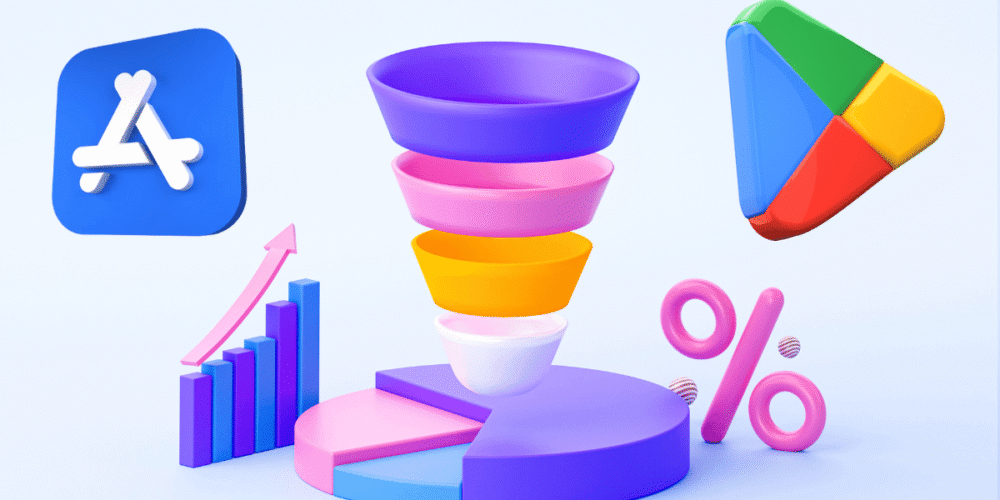
If your screenshot order looks like a gallery, you’re wasting attention.
A better structure:
-
Outcome (what changes for me)
-
Proof (why I should trust it)
-
How it works (simple mechanism)
-
Risk reducer (no traps, no friction surprises)
-
Depth (features for power users)
This isn’t copywriting fluff. It’s decision sequencing.
If you want more store-page frameworks, start here:
App marketing expert tips, ASO guides & growth strategies
https://growthlaunch.net/learn-app-marketing-expert-tips-aso-guides-growth-strategies/
Before → after rewrite (what “belief” sounds like)
Before: “All-in-one productivity app.”
After: “Know what to do next in 10 seconds.”
Before: “AI habit tracker with reminders.”
After: “Build habits that stick with a plan you’ll follow.”
Before: “Personal finance dashboard.”
After: “Stop wondering where your money went.”
The pattern is simple:
🔍 Stop describing the category. Start describing the after.
Reason #3: Their product creates an early “first win.”
Even if you climb into Top 100… you can still fall out fast.
One reason: users install, open once, and disappear.
Google explicitly points developers to Android Vitals and app quality signals, which include stability and performance metrics. And Google lists engagement/quality signals as part of ranking factors across discovery surfaces.
The takeaway is practical:
Top 100 attempts die when the product feels slow, confusing, or empty early.
So winning apps design a “first win.”
A moment where the user thinks:
“Okay. This works.”
Not later.
Now.
Examples of first wins:
-
a plan generated instantly
-
a result shown immediately
-
a clear next step with progress
-
a meaningful “before/after” preview
Charts don’t reward potential. They reward behavior that continues.
If you want the deeper retention layer that keeps momentum alive:
https://growthlaunch.net/the-ultimate-2025-app-retention-monetization-playbook/
Reason #4: They ship proof that reduces risk
This is the part most founders skip.
Because proof feels “marketing-ish”. But proof is not marketing.
Proof is risk control.
Your launch is asking strangers to do something irreversible:
install + give attention + trust permissions + potentially pay later
So apps that break out fast lead with credibility signals.
Here are proof types that actually change behavior:
-
Outcome proof: “Save 2 hours/week”
-
Constraint proof: “No account required” / “Works offline”
-
Friction proof: “Setup in 30 seconds”
-
Policy comfort: “No ads” / “No tracking” (only if true)
-
Social proof: press, credible creators, specific testimonials
These don’t just lift conversion. They lift confidence.
And confidence multiplies velocity.
Reason #5: They avoid quality penalties that kill momentum
This is the unsexy reason Top 100 dreams fail.
The app breaks. The store page promise collapses.
Users leave angry reviews.
Uninstalls spike.
Momentum decays.
Google’s own ecosystem emphasizes app quality via Android Vitals (stability, performance, battery, etc.).
So if your Android experience is unstable on mid-range devices… Top 100 becomes harder to hold.
This is also where category strategy matters.
Some categories are “velocity hungry.”
Others are easier to enter if you’re highly specific.
If you’re serious about Play-specific improvements, this internal piece fits:
https://growthlaunch.net/google-play-improvements-2026/
The Top 100 launch sequence

You don’t need a bigger budget.
You need the correct order.
Here’s the sequence that prevents wasted bursts.
Step 1: Choose the Top 100 you actually want
There are different ladders:
-
Overall Top 100 (hardest)
-
Category Top 100 (most realistic)
-
Country/region Top 100 (best first win)
Start where you can realistically hold.
Entry is easier than staying.
Step 2: Fix the store page before you push volume
If conversion is weak, velocity becomes expensive.
Run native experiments:
-
Apple: Product Page Optimization
-
Google Play: Store Listing Experiments
You don’t need 20 tests.
You need 2 tests that matter:
-
Screenshot #1 headline and framing
-
Screenshot sequence/order
That’s where belief is won or lost.
Step 3: Preload demand for 7 days
This is where breakout apps quietly win.
They don’t launch cold.
They warm the audience.
Preload channels that work:
-
creators that can drive installs inside 24h
-
short-form clips that land the promise fast
-
community drops where your niche already lives
-
email waitlists with one-click install prompt
If short-form is your driver, this ties directly:
https://growthlaunch.net/tiktok-2-0-how-3-6-second-video-ads-are-boosting-app-downloads/
Step 4: Run a 72-hour “density burst”
The goal isn’t a big spike. It’s consistency.
You want installs to stack daily without falling off a cliff.
Velocity that whiplashes looks like hype.
Velocity that holds looks like demand.
Step 5: Hold for 3–5 days with stability + reputation
This is where most founders stop.
And this is why most Top 100 entries disappear fast.
Hold tactics:
-
review prompts at the right moment (post-win, not pre-win)
-
bug fixes fast
-
onboarding friction removal
-
matching your ad promise everywhere
If you hold, charts become a multiplier.
If you don’t, charts become a refund request.
The takeaway
Apps hit Top 100 fast when they stack five things:
-
demand compressed into time
-
a store page that seals belief
-
a “first win” that happens early
-
proof that reduces fear
-
quality that prevents decay
Most apps never hit Top 100 because they focus on only one.
If you need help ranking your app higher and boosting your app downloads, then we have the right solution for you right here:
👉 https://growthlaunch.net

Organic ASO in 2025: How to.
Why Organic Growth Still Matters in 2025 Paid ads are getting expensive. CPI (Cost Per Install).
TikTok 2.0: How 3–6 Second Video.
Why You Can’t Afford to Ignore TikTok’s Swipe Mode Revolution TikTok’s latest evolution, Swipe Mode +.