
If I Ran Google Play: 9 Changes That Would Instantly Improve Installs + User Experience
Google Play Has a Trust Problem, Here Are 9 Fixes I’d Ship in 2026
Google Play doesn’t have an “apps” problem.
It has a signal problem.
Too many apps look good enough at first glance…
and users pay for it with:
- regret installs
- wasted time
- fast uninstalls
- and trust that slowly disappears
Meanwhile, real developers don’t lose because their app is bad.
They lose because they’re competing inside a store where clarity is optional and noise is rewarded.
At Growth Launch (Launching your app’s growth), we spend a lot of time diagnosing why apps don’t convert, and the pattern is always the same:
Traffic doesn’t fix confusion. It amplifies it.
(If you’re fixing conversion leaks right now: https://growthlaunch.net)
This post is my take on what I’d change if I ran Google Play.
Not “nice-to-have” improvements.
9 changes that would immediately improve both user experience AND developer growth.
TL;DR (read this in 15 seconds)
If Google Play shipped only 9 changes this year, I’d pick:
- a visible Quality Score
- better search relevance (less “SEO spam apps”)
- reviews with a credibility layer
- forced pricing transparency
- clearer Data Safety for humans
- ranking that rewards retention (not installs only)
- better previews before install
- real penalties for battery/performance abuse
- growth tools that reduce guesswork (built-in intent matching)
Now let’s break them down.
The real problem: Google Play feels like guesswork
Most founders don’t struggle because they aren’t “working hard”.
They struggle because growth becomes a lottery:
- “Maybe my icon is wrong.”
- “Maybe my screenshots are weak.”
- “Maybe reviews are hurting.”
- “Maybe keywords changed.”
- “Maybe it’s just the algorithm.”
This is why Google Play created tools like:
- Store Listing Experiments (native A/B testing)
- Custom Store Listings (message matching per audience)
The platform knows conversion is fragile.
But the store still leaves too much room for misleading positioning, noisy listings, and low-trust installs.
The 9 changes I’d ship (if I ran Google Play)
1) A public “App Quality Score” (stop hiding the signal)
What I’d ship
A visible quality score based on real user outcomes:
- crash rate
- uninstall rate
- retention
- refund complaints
- performance (Android vitals)
Why users win
Fewer “this looked good but it’s trash” installs.
Why developers win
Quality apps stop getting buried under hype.
What you can do today
Make Screenshot #1 about the outcome, not the UI.
Because users don’t install apps.
They install promises.
2) Search should stop rewarding generic “SEO apps”
What I’d ship
If your listing looks like this…
- “All-in-one productivity platform”
- “AI-powered smart app”
- “The best solution for everything”
…you shouldn’t rank.
Because that’s not clarity. It’s bait.
Why users win
Search results become more relevant.
Why developers win
You compete on usefulness instead of buzzwords.
What you can do today
Replace generic language with intent:
Bad: “Manage your business”
Good: “Send invoices in 10 seconds”
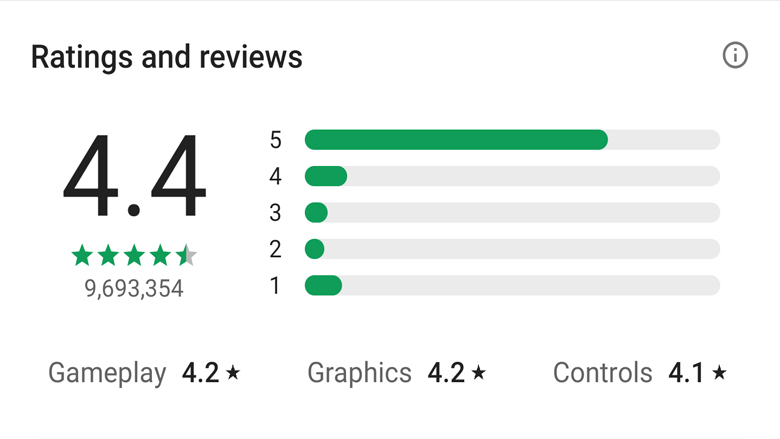
3) Reviews need a credibility layer (not just a star number)
What I’d ship
Reviews split into clear groups:
- long-term users
- new users
- flagged suspicious bursts
Most users already assume reviews are gameable.
Google Play should stop pretending a single average score tells the truth.
Why users win
Trust becomes real again.
Why developers win
Good apps stop losing to review manipulation.
What you can do today
Ask for reviews only after value happens, not after signup.
4) Pricing transparency should be mandatory
What I’d ship
If you have a paywall, you must clearly show:
- pricing range
- free vs locked features
- trial terms
- cancellation clarity
Because a huge chunk of uninstalls come from one feeling:
“I just got tricked.”
Why users win
Less install regret.
Why developers win
Fewer low-quality installs that churn fast.
What you can do today
Add one screenshot that makes pricing feel safe:
“Free to try • Cancel anytime • No hidden charges”
5) Data Safety should be readable by humans
Google Play already requires a Data Safety section where developers disclose data practices.
That’s good.
But it still feels like legal text for most users.
What I’d ship
A simplified “trust summary” at install time:
- Tracks location: Yes/No
- Sells data: Yes/No
- Encrypts data: Yes/No
- Uses ads personalization: Yes/No
Why users win
Less fear = more confident installs.
Why developers win
Privacy-first apps finally get rewarded visually.
What you can do today
If privacy is a strength, say it clearly:
“Private by default. No tracking.”
(Only if it’s true.)
6) Ranking should reward retention, not installs
Many ASO analyses note that Google Play visibility is influenced by signals like engagement, retention, ratings, and technical quality, not just downloads.
What I’d ship
A ranking model that heavily rewards:
- low uninstall rate
- strong day 1/day 7 retention
- high engagement consistency
Why users win
Apps that stick rise up.
Why developers win
You don’t need viral spikes to survive.
What you can do today
Reduce “time-to-value”.
Make users reach the first win in under 30 seconds.
7) Previews should feel like trying the app, not gambling on it
Right now, users “install to find out”.
That’s backwards.
What I’d ship
A stronger preview layer:
- short interactive preview
- clearer feature outcomes
- “what you can do in 10 seconds” snapshots
Why users win
Less wasted installs.
Why developers win
Higher conversion + better quality users.
What you can do today
Your first 3 screenshots should answer:
- what do I get
- who is it for
- why should I trust it
8) Battery/performance abusers should be punished harder
Users don’t uninstall because an app is “slightly slow”.
They uninstall because it feels harmful:
- drains battery
- crashes
- runs in background for no reason
Android vitals are already considered an important quality signal in ranking discussions.
What I’d ship
A visible performance badge:
- “Battery friendly”
- “Low crash risk”
- “Lightweight install”
Why users win
Better phone experience.
Why developers win
Quality work gets recognized.
What you can do today
Be proud of your performance.
Put it in your listing:
“Lightweight • Fast • No background drain”

9) Growth tools should reduce guesswork (not add complexity)
Google Play already gives developers a powerful advantage:
✅ Store Listing Experiments (native A/B testing)
✅ Custom Store Listings (tailor message per audience)
These tools exist for a reason:
Because intent matching changes conversion.
What I’d ship
Inside Play Console:
- clearer recommendations (“test screenshot #1 first”)
- category benchmarks right where you need them
- easier routing from ad angle → matching listing
Bonus: Google is making it harder for new dev accounts (and that matters)
Google Play now has testing requirements for personal developer accounts created after Nov 13, 2023, before an app can be made available publicly.
This is meant to improve quality…
…but it also raises the stakes:
If publishing is harder, your listing clarity must be better.
Because you don’t get infinite “launch attempts” anymore.
What app owners should do even if Google changes nothing
Here’s the reality:
Google Play will evolve slowly.
So your move is to win inside the current rules.
Start here:
✅ Screenshot #1 = one clear outcome
✅ Title = intent (not branding)
✅ Add proof (ratings, numbers, credibility)
✅ Make pricing feel safe
✅ Match ad promise → store promise
✅ Run 1 A/B test at a time (don’t guess)
If you want a quick framework, we build these clarity diagnostics at Growth Launch:
👉 https://growthlaunch.net
Final thought
Google Play shouldn’t feel like a casino. Users should feel confident installing. Developers should feel rewarded for quality.
Right now, too many apps win by being loud, not useful.
That hurts everyone.
If Google shipped only ONE fix from the 9 above, which would you pick?

ASO Trends 2026: How to Rank.
Top rankings in 2026 aren’t won by “adding more keywords.” They’re won by being the best.

The Ultimate 2025 App Retention &.
The Ultimate 2025 App Retention & Monetization Playbook How to Keep Users, Boost Revenue, and Protect.